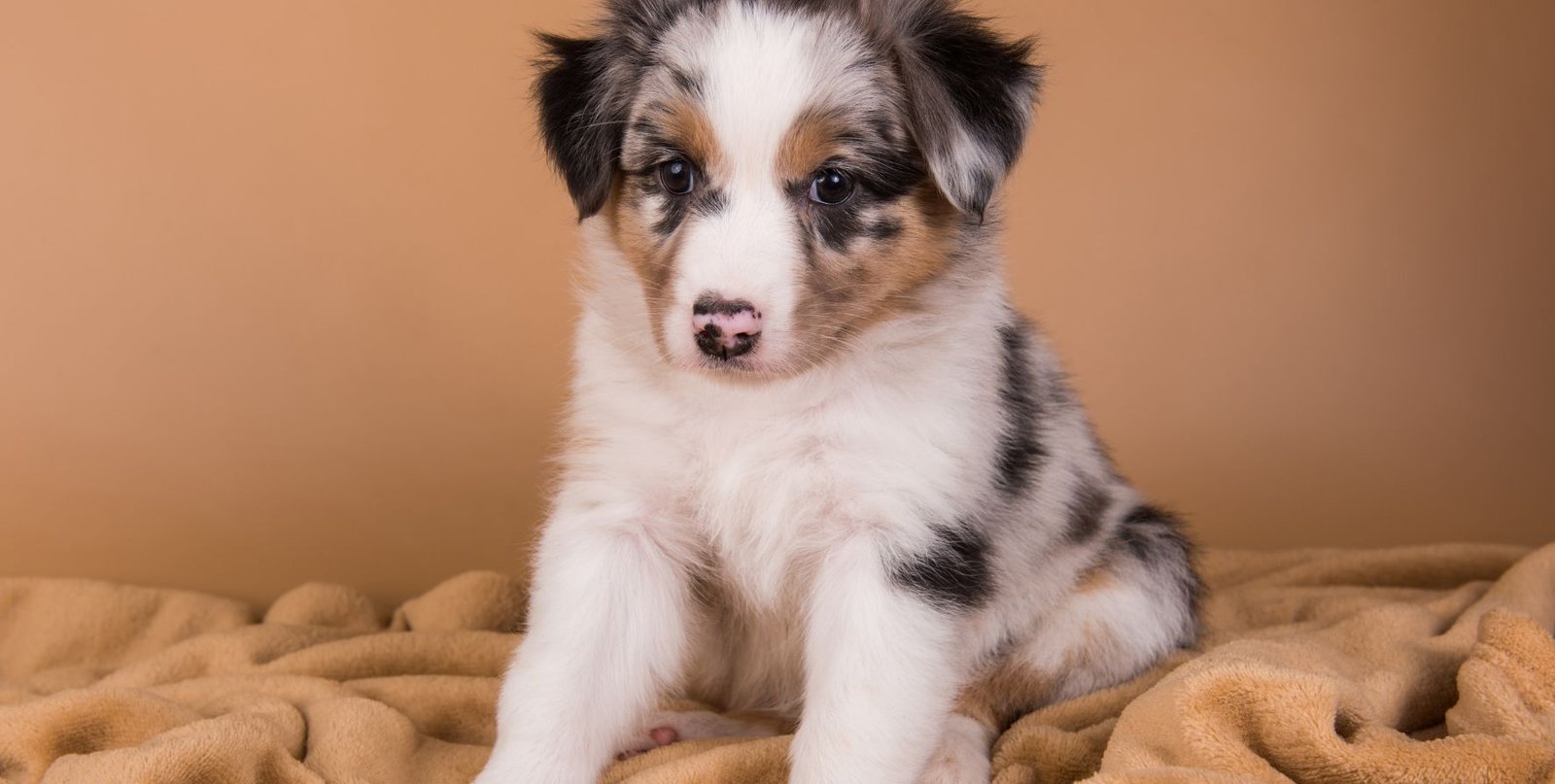
Blue Merle Australian Shepherd Puppy
Complete Guide to Training, Care, Temperament and Raising a Happy Dog
Bringing home a Blue Merle Australian Shepherd puppy is an exciting experience. Those striking blue-grey coats, beautiful markings and bright, alert eyes make this breed hard to resist. But behind that gorgeous appearance is an intelligent, energetic working dog that needs plenty of attention, structure and the right training from an early age.
If you’re thinking about getting one, or you’ve recently welcomed a blue merle Aussie into your home, you probably have questions. How much exercise does your puppy need? Are Australian Shepherds difficult to train? How do you prevent excessive barking, nipping and destructive behaviour?
These are important questions because Australian Shepherds aren’t ordinary couch-potato dogs. They were bred to work, think independently and respond to their handlers. Without enough physical activity and mental stimulation, even the sweetest puppy can develop frustrating habits.
At mydogtrained.com, we believe successful dog ownership starts with understanding your dog’s natural instincts and building good habits early.
This guide covers everything you need to know about raising a Blue Merle Australian Shepherd puppy, including temperament, socialisation, feeding, grooming, common behavioural problems and practical step-by-step training techniques.
Let’s get started.

What Is a Blue Merle Australian Shepherd Puppy?
Despite the breed’s name, Australian Shepherds were developed primarily in the United States, where they became popular working dogs on ranches and farms.
Their original purpose was herding livestock. This background explains why they are naturally alert, responsive, energetic and eager to have a job.
The blue merle coat typically features:
-
A mixture of grey, black and lighter silver colouring.
-
Irregular black patches and markings.
-
White areas, often around the chest, legs and face.
-
Tan or copper markings on the eyebrows, cheeks and legs in some puppies.
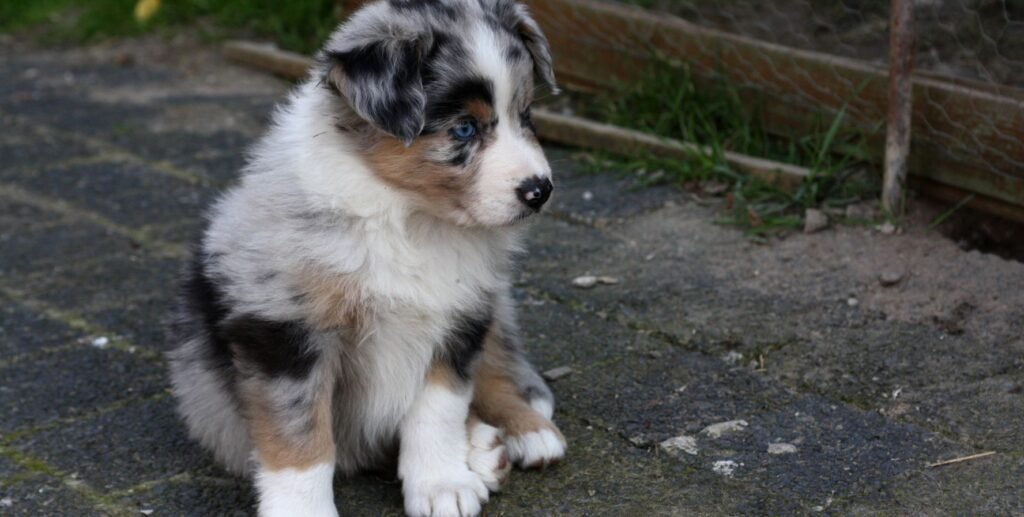
Some blue merle Australian Shepherds also have striking blue eyes, brown eyes or one of each.
Important: Coat colour does not determine personality. A blue merle puppy has essentially the same breed characteristics and training requirements as a black tri, red merle or red tri Australian Shepherd.

Blue Merle Australian Shepherd Puppy Temperament: What Should You Expect?
Your puppy may quickly become your shadow, following you from room to room and watching everything you do.
This attachment can be wonderful, but it also means you need to teach independence and confidence.
Here are some common personality characteristics.
1. Extremely Intelligent
Australian Shepherds learn quickly. They can pick up commands, routines and household rules with impressive speed.
However, intelligence comes with responsibility.
If you don’t give your puppy appropriate activities, they may invent their own entertainment. This could include chewing furniture, digging holes, barking at passing people or chasing moving objects.
Keep training sessions short, interesting and rewarding.
2. High Energy Levels
These puppies have plenty of enthusiasm.
They enjoy:
-
Walking and exploring.
-
Fetch and interactive games.
-
Learning new commands.
-
Food puzzles and scent games.
-
Running and playing with appropriate canine companions.
Remember that young puppies need controlled exercise rather than forced long-distance running or repetitive high-impact activities.
3. Strong Herding Instincts
One behaviour that surprises new owners is herding.
Your puppy may attempt to chase moving children, nip at ankles or follow other household pets around.
This behaviour comes from generations of selective breeding.
It doesn’t mean your puppy is aggressive. However, it needs to be redirected before it becomes an established habit.
4. Loyalty and Attachment
Australian Shepherds often develop strong relationships with their families.
They enjoy being involved in everyday activities and can become uncomfortable when left alone for extended periods.
Teach your puppy that spending time independently is perfectly safe.
How to Train a Blue Merle Australian Shepherd Puppy
You don’t need complicated equipment or professional experience to establish good foundations. What you need is patience, consistency and rewards your puppy genuinely enjoys.
Here are six essential training exercises.
Step 1: Teach Your Puppy Its Name
Before introducing complicated commands, teach your puppy to recognise its name.
This gives you a simple way to get its attention.
How to do it:
-
Choose a quiet room without distractions.
-
Say your puppy’s name once in a cheerful voice.
-
When it looks towards you, immediately say “Yes!”
-
Reward it with a small treat.
-
Repeat five to ten times.
Practise this several times throughout the day.
Avoid repeatedly shouting your puppy’s name when it isn’t responding. You want the name to become a positive signal rather than background noise.
Step 2: Teach the Sit Command
Sit is one of the most useful early obedience commands.
It helps you manage excitement before meals, when greeting visitors and when preparing to go outside.
Training instructions:
-
Hold a small treat close to your puppy’s nose.
-
Slowly move the treat upwards and slightly backwards.
-
As your puppy follows the treat, its bottom will naturally move towards the floor.
-
The moment it sits, say “Sit” and reward it.
-
Repeat several times.
Keep sessions around three to five minutes.
Never push your puppy’s bottom down physically. Allow it to discover the position naturally.
Step 3: Establish a Reliable Recall
This is particularly important for Australian Shepherds because their natural curiosity and herding instincts can make outdoor distractions extremely tempting.
Start indoors.
-
Move a short distance away from your puppy.
-
Say “Come!” in an enthusiastic voice.
-
Crouch slightly or move backwards to encourage it.
-
When your puppy reaches you, reward generously.
-
Gradually practise from greater distances.
Once your puppy understands the command indoors, move to a secure garden or enclosed training area.
Use a long training line when practising outdoors in unsecured areas.
Never punish your puppy for coming back, even if it takes a while. You want returning to you to be one of the best experiences your dog can have.
Step 4: Stop Puppy Biting and Nipping
Australian Shepherd puppies can be mouthy.
You might notice your puppy grabbing your trousers, biting your hands or attempting to nip at your ankles.
This is often related to normal puppy development, excitement, play or herding instincts.
Here’s how to manage it:
-
Keep an appropriate chew toy nearby.
-
Redirect biting towards the toy.
-
Stop playing briefly if your puppy continues biting.
-
Reward calm interaction.
-
Make sure your puppy gets enough sleep.
Avoid shouting, hitting or grabbing your puppy’s muzzle.
These reactions can increase excitement or create fear without teaching the behaviour you actually want.
If ankle chasing becomes a regular problem, calmly interrupt it and redirect your puppy towards an appropriate activity.
Step 5: Teach Loose-Leash Walking
Australian Shepherds are strong, active dogs, and pulling can become difficult to manage as they grow.
Start leash training early.
Follow these steps:
-
Allow your puppy to become comfortable wearing a properly fitted harness.
-
Begin walking in a quiet area.
-
Reward your puppy when it walks beside you.
-
If it pulls, stop moving.
-
Resume walking when the leash becomes loose.
-
Reward frequently when your puppy stays close.
Keep early walks short and enjoyable.
Avoid dragging your puppy along or allowing every walk to become a battle.
Step 6: Teach Your Puppy to Settle
This is one of the most valuable skills you can teach an energetic breed.
Australian Shepherds need to learn that relaxing is just as important as playing.
Place a comfortable bed or mat in a quiet area.
Whenever your puppy lies down naturally, calmly reward it with a small treat.
Gradually introduce a cue such as “Settle”.
Reward calm behaviour without constantly exciting your puppy with attention.
Over time, your dog will learn that relaxing around the house is part of its everyday routine.
Socialising Your Blue Merle Australian Shepherd Puppy
A well-socialised Australian Shepherd is more likely to grow into a confident adult that can handle different environments without becoming fearful or overly reactive.
Start early, ideally during the important puppy socialisation period, which is generally considered to be the first three months of life.
However, socialisation doesn’t mean forcing your puppy to meet every dog or person.
It means creating positive experiences.
Introduce Your Puppy to Different Experiences
Gradually expose your puppy to:
-
Different people, including children.
-
Friendly, vaccinated and appropriately matched dogs.
-
Household noises and everyday appliances.
-
Car journeys.
-
Different floor surfaces.
-
Parks and quiet outdoor environments.
-
People wearing hats, carrying umbrellas or using walking frames.
Keep experiences positive and allow your puppy to observe from a comfortable distance.
Avoid overwhelming your puppy with too many new experiences at once.
Expert tip: Reward your puppy whenever it calmly notices something unfamiliar. You are teaching it that new experiences are nothing to fear.
Speak with your veterinarian about safe socialisation options before your puppy has completed its vaccinations.
How Much Exercise Does a Blue Merle Australian Shepherd Puppy Need?
Australian Shepherds are active dogs, but puppies have different exercise requirements from adults.
Their joints, muscles and bones are still developing.
Avoid assuming that exhausting your puppy will solve behavioural problems.
Too much forced exercise can cause unnecessary physical stress, while insufficient stimulation can contribute to boredom.
A balanced routine should include:
| Activity | Purpose |
|---|---|
| Short walks | Gentle exploration |
| Training sessions | Mental development |
| Scent games | Natural instincts |
| Food puzzles | Problem-solving |
| Supervised play | Physical activity |
| Rest periods | Healthy development |
As your puppy grows, gradually increase activity according to its physical development and veterinary advice.
Avoid repetitive high-impact jumping, forced running beside bicycles and excessive stair climbing.
Mental Exercise Is Just as Important
A clever Australian Shepherd needs something to think about.
Try these activities:
Find the Treat: Hide a few treats around a room and encourage your puppy to sniff them out.
Food Puzzle: Use an appropriate puppy puzzle feeder to make mealtimes more interesting.
Name the Toy: Introduce a few toys and reward your puppy for selecting the correct one when asked.
Basic Obedience: Practise sit, down, stay and recall in short sessions.
Ten minutes of thoughtful training can be more useful than endless repetitive play.
Feeding and Caring for Your Blue Merle Australian Shepherd Puppy
Choose a complete and balanced puppy food formulated for growth. Your veterinarian can help you select an appropriate diet based on your puppy’s age, weight and expected adult size.
How Often Should You Feed Your Puppy?
A general feeding schedule looks like this:
-
8–12 weeks: Usually four meals daily.
-
3–6 months: Usually three meals daily.
-
6–12 months: Often two meals daily.
These are general guidelines rather than strict rules.
Follow the feeding recommendations on your chosen food and adjust portions according to your puppy’s body condition and growth.
Always provide fresh drinking water.
Avoid regularly feeding excessive treats or table scraps. Treats should make up only a small proportion of your puppy’s daily calorie intake.
Grooming a Blue Merle Australian Shepherd
The Australian Shepherd has a medium-length double coat designed to provide protection in different weather conditions.
Although the blue merle pattern looks impressive, it doesn’t require special grooming products.
Regular maintenance is more important than expensive treatments.
Your Basic Grooming Routine
Brushing: Brush two or three times weekly to remove loose hair and prevent tangles.
Bathing: Bathe when necessary using a suitable dog shampoo.
Nails: Check nails regularly and trim when needed.
Ears: Check for dirt, redness or unpleasant smells.
Teeth: Introduce gentle toothbrushing early using dog-specific toothpaste.
Australian Shepherds can shed considerably, particularly during seasonal coat changes.
Regular brushing helps manage loose hair and keeps the coat in good condition.
Important Health Considerations
Blue merle Australian Shepherds can have the same general health risks as other Australian Shepherds.
Potential concerns include:
-
Hip dysplasia.
-
Certain inherited eye conditions.
-
Epilepsy.
-
Some inherited drug sensitivities, including MDR1-related medication sensitivity.
The merle gene deserves particular attention.
Breeding two merle-patterned dogs together can produce puppies with two copies of the merle gene, sometimes called double merles. These puppies have a significantly increased risk of hearing and vision abnormalities.
If you’re buying a puppy, ask the breeder about genetic testing, eye examinations and health screening of the parents.
A responsible breeder should be willing to discuss these matters openly.
Common Mistakes to Avoid When Raising an Australian Shepherd Puppy
Even experienced dog owners can make mistakes when raising an intelligent working breed.
Here are some problems worth avoiding.
1. Providing Too Little Mental Stimulation
A bored Australian Shepherd can quickly become destructive.
Provide puzzle toys, scent games and short obedience sessions every day.
2. Exercising Your Puppy Until It Is Exhausted
More exercise isn’t always better.
Young puppies need adequate rest and age-appropriate physical activity.
3. Ignoring Nipping Behaviour
Ankle biting and chasing may seem harmless when your puppy is small.
However, these behaviours can become frustrating as your dog gets bigger.
Redirect them consistently from the beginning.
4. Allowing Inconsistent Rules
If your puppy is allowed to jump on people one day but punished for it the next, it won’t understand what you expect.
Make sure everyone in the household follows the same training rules.
5. Forgetting to Teach Independence
Australian Shepherds can become overly dependent on their owners.
Practise short periods of comfortable separation, gradually increasing the time as your puppy becomes confident.
Never leave a distressed puppy to cry for extended periods in the hope that it will simply get used to being alone.
Frequently Asked Questions
1. Are Blue Merle Australian Shepherd Puppies Good Family Dogs?
Yes. They can make excellent family companions when properly trained, socialised and exercised.
They are generally affectionate, intelligent and loyal.
However, their herding instincts may lead to chasing or nipping, particularly around young children who run and play.
Supervise interactions and teach children how to behave safely around dogs.
2. Are Blue Merle Australian Shepherds Rare?
Blue merle is one of the recognised Australian Shepherd coat patterns.
Although the colouring is distinctive and popular, blue merle Australian Shepherds are not exceptionally rare.
Their coat colour does not make them a separate breed or guarantee a particular temperament.
3. Are Blue Merle Australian Shepherd Puppies Easy to Train?
They are generally highly trainable because of their intelligence and eagerness to work with people.
However, they also need consistent guidance, mental stimulation and clear boundaries.
Short, reward-based training sessions are usually more effective than long, repetitive lessons.
An intelligent dog still needs an owner who understands how to teach it properly.
Conclusion: Raising a Happy and Well-Trained Blue Merle Australian Shepherd Puppy
A Blue Merle Australian Shepherd puppy is much more than a beautiful dog with an unusual coat.
You’re bringing home an intelligent, energetic working breed that needs direction, companionship, exercise and plenty of opportunities to learn.
The secret to raising a well-behaved Australian Shepherd isn’t simply giving it more exercise. It’s creating a balanced routine that combines obedience training, positive socialisation, mental challenges, appropriate physical activity and sufficient rest.
Start with the basics.
Teach your puppy its name, practise recall, establish good leash manners and address unwanted behaviours before they become habits. Most importantly, make training a positive part of everyday life.
You don’t need a perfectly behaved dog overnight. You need consistency, patience and a willingness to build good habits one day at a time.
Your next step: Start with five minutes of name recognition and recall training today. Those small early lessons can become the foundation for years of trust, communication and companionship.
At mydogtrained.com, we believe every dog deserves an owner who understands it. Give your blue merle Aussie the right start, and you’ll be building the foundations of a wonderful lifelong relationship.