Clicker Training Guide for Beginners
How to Train Your Dog Step by Step
Have you ever wished your dog would listen more consistently, learn new commands faster, or stop repeating unwanted behaviors? Perhaps you’ve tried treats, verbal praise, or traditional training methods without getting the results you hoped for. You’re not alone, and there’s a simple training technique that can help you communicate more clearly with your dog.
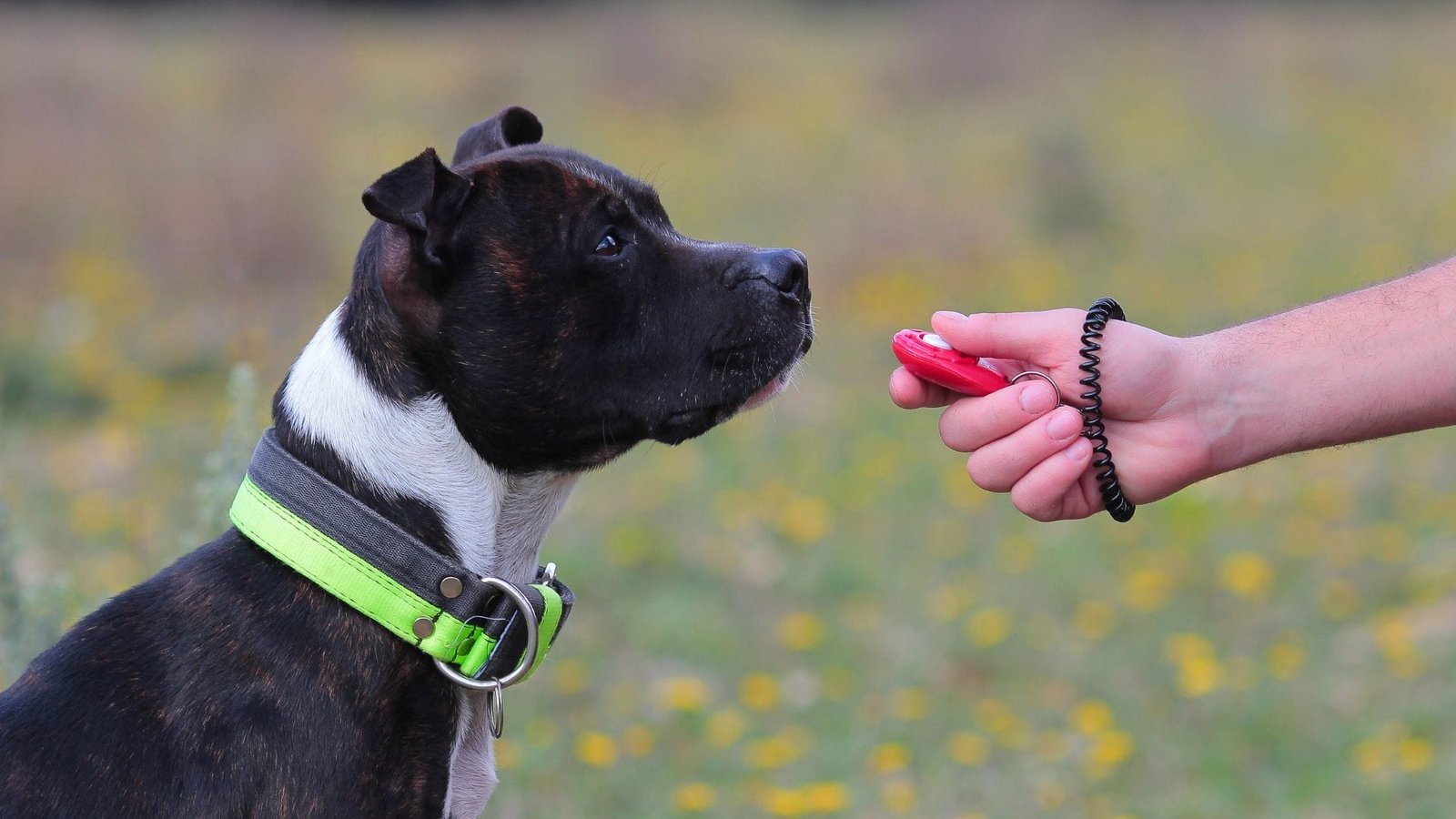
A clicker training guide for beginners is the perfect starting point if you want to teach your dog new skills using positive reinforcement. Clicker training uses a small device that makes a distinct clicking sound to mark the exact moment your dog performs a desired behavior. When you follow that sound with a reward, your dog begins to understand which actions earn something good.
At MyDogTrained.com, our goal is to help dog owners build better relationships with their pets through practical, reward-based training advice. You don’t need expensive equipment, professional experience, or hours of free time to get started. With patience, consistency, and the right approach, you can begin teaching your dog valuable skills at home.
In this guide, you’ll learn how clicker training works, how to introduce the clicker, which exercises to practise first, and how to avoid common mistakes that slow progress.

What Is Clicker Training for Dogs?
Clicker training is a form of positive reinforcement training that uses a consistent sound to identify a behavior you want your dog to repeat.
A clicker is a small handheld device that produces a short, distinctive clicking noise when pressed. Instead of relying entirely on spoken praise, you use the sound to tell your dog, “That was exactly right!”
For example, imagine you’re teaching your dog to sit. The moment your dog’s bottom touches the floor, you click and then give a treat. With repetition, your dog learns that sitting can earn a reward.
The click doesn’t reward the dog by itself. Instead, it acts as a precise marker that predicts a reward is coming.
Why Does Clicker Training Work?
Dogs learn by associating actions with consequences. When a particular behavior consistently leads to something enjoyable, such as food, play, or attention, the dog is more likely to repeat it.
Clicker training makes that connection easier to understand because the sound marks the successful behavior at a specific moment.
The main benefits include:
- Clear communication: Your dog can identify the behavior that earned a reward.
- Precise timing: You can mark a correct action even when it happens quickly.
- Positive learning: Training focuses on rewarding desirable behavior rather than punishing mistakes.
- Better engagement: Short, rewarding sessions can make learning enjoyable.
- Versatility: You can teach basic manners, recall, tricks, and more advanced skills.
Clicker training isn’t a magic solution, however. Your dog still needs practice, suitable rewards, a comfortable learning environment, and opportunities to succeed.
What Do You Need to Start Clicker Training?
You only need a few basic supplies to begin.
1. A Dog Training Clicker
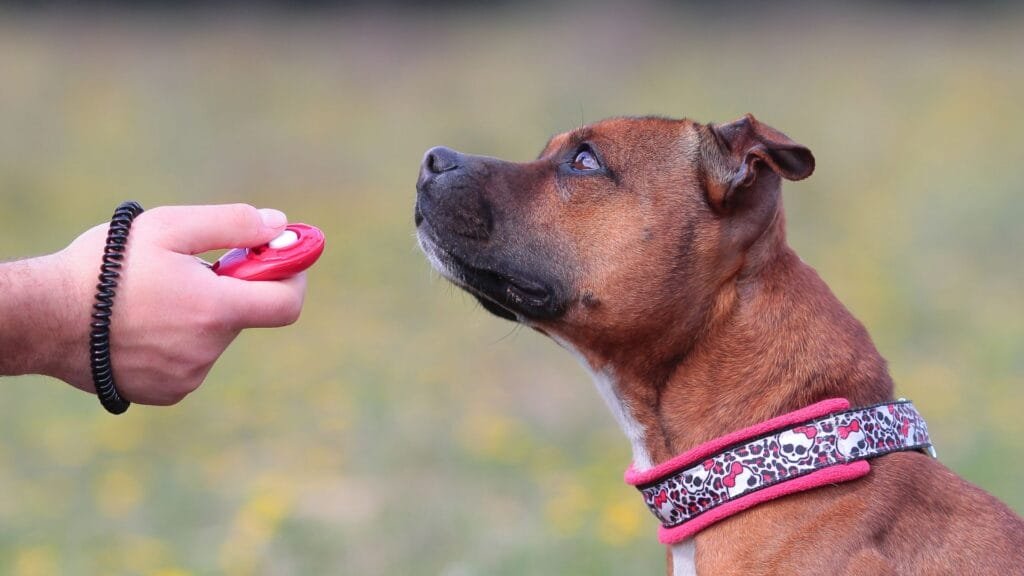
Choose a simple handheld clicker that produces a consistent sound. Some clickers have buttons, while others use a metal tongue that makes a clicking noise when pressed.
If your dog is nervous around sudden sounds, choose a quieter model or muffle the sound initially. You can also use a consistent verbal marker, such as “Yes!”, if a mechanical clicker is uncomfortable for your dog.
2. Small, Tasty Training Treats
Food rewards are often useful when introducing clicker training. Choose something your dog enjoys and can eat quickly.
Good options include:
- Small pieces of your dog’s regular kibble.
- Soft commercial training treats.
- Tiny pieces of plain, cooked chicken.
- Other dog-safe foods suitable for your pet.
Keep treats small to avoid overfeeding. If you use a lot of rewards during the day, account for them in your dog’s daily food allowance.
3. A Quiet Training Area
Begin in a familiar room with few distractions. Turn off the television, put away exciting toys, and give your dog enough space to move comfortably.
Once your dog understands an exercise, gradually practise in different rooms and outdoor locations.
4. Patience and Consistency
Your dog doesn’t need to master everything immediately. Some dogs understand the process within a few repetitions, while others need more time.
Keep your expectations realistic and celebrate small improvements.
Clicker Training Guide for Beginners: Step-by-Step Instructions
The easiest way to learn clicker training is to start with a few simple exercises before introducing more challenging commands.
Step 1: Teach Your Dog What the Click Means
Before using a clicker to teach commands, help your dog associate the sound with a reward. Trainers often call this process charging the clicker.
Follow these steps:
- Find a quiet area where your dog feels comfortable.
- Have your clicker and a small supply of treats ready.
- Press the clicker once.
- Immediately give your dog a treat.
- Wait a moment, then repeat the process.
- Complete approximately 5–10 repetitions before taking a break.
The sequence should always be click first, reward second.
You don’t need to ask your dog to sit, lie down, or perform any other behavior during this stage. The goal is simply to establish the association between the click and the reward.
Repeat a short session later if needed. You’ll know the association is developing when your dog begins anticipating the treat after hearing the click.
Avoid clicking repeatedly without delivering rewards. Every training click should predict something positive.
Step 2: Teach the Sit Command
Once your dog understands the click, begin with a familiar, straightforward behavior.
How to teach sit:
- Stand in front of your dog with a treat ready.
- Hold the treat near your dog’s nose.
- Slowly move the treat upward and slightly backward over the head.
- As your dog follows the treat, its bottom may naturally move toward the floor.
- The instant the bottom touches the ground, click.
- Immediately give the treat.
- Allow your dog to stand again and repeat.
At first, mark the movement you want rather than worrying about whether your dog stays seated for a long time.
After several successful repetitions, introduce the verbal cue “Sit” just before your dog begins the movement. Avoid repeating the command several times if your dog doesn’t respond.
If your dog backs away instead of sitting, adjust how you move the treat or try the exercise in a corner with more limited space.
Step 3: Teach Down
Teaching your dog to lie down is another useful beginner exercise.
- Ask your dog to sit if it already understands that behavior.
- Hold a treat close to its nose.
- Slowly lower the treat toward the floor.
- Move it slightly forward to encourage your dog to lower its body.
- Click when your dog’s elbows and body reach the floor.
- Deliver the reward immediately.
If your dog struggles, reward smaller movements first. For example, click when it lowers its head or bends its front legs, then gradually wait for a more complete down position.
This gradual process is called shaping. It allows you to build a complex behavior through smaller, achievable steps.
Never force your dog into position by pushing down on its back. If lying down seems uncomfortable, stop and consider whether pain or a physical limitation could be involved.
Step 4: Reward Good Behavior You See Naturally
Clicker training isn’t limited to teaching formal commands. You can also use it to reinforce everyday behaviors that make life with your dog easier.
For example, you might click and reward when your dog:
- Sits calmly before you attach the lead.
- Keeps four paws on the floor instead of jumping on visitors.
- Settles quietly on a mat.
- Looks at you when you say its name.
- Approaches you when called.
- Remains calm when someone walks past at a comfortable distance.
This is sometimes called capturing behavior because you mark a desirable action when it happens naturally.
Suppose your dog tends to jump excitedly when you come home. Wait for a brief moment when all four paws are on the floor, click, and reward that calmer behavior.
With repetition, you can encourage the behavior you prefer without shouting or physically correcting your dog.
Step 5: Introduce a Release Cue
Some exercises require your dog to remain in position until you give another signal.
Once your dog can sit briefly, introduce a release word such as “Free” or “Okay.”
Ask your dog to sit, click and reward the sit, then say your release word and encourage your dog to move.
Over time, practise gradually increasing the duration of the sit before releasing your dog. Reward successful, short periods first rather than expecting a long stay immediately.
Remember that a click normally marks the successful behavior and predicts a reward. It does not automatically mean the dog is released from its position.
Step 6: Practise Recall Using the Clicker
Recall is one of the most valuable skills your dog can learn.
Start indoors, where there are few distractions and your dog can move safely.
- Move a short distance away from your dog.
- Say your chosen recall cue, such as “Come!”
- Encourage your dog to approach you.
- Click the moment your dog reaches you.
- Deliver a particularly appealing reward.
- Repeat with short distances before gradually increasing the challenge.
Make coming to you a positive experience. Never call your dog to punish it, and avoid scolding it if it takes time to respond.
For outdoor practice, use a secure, enclosed area or a suitable long line attached to a well-fitted harness. Don’t test an unreliable recall beside roads, wildlife, or other hazards.
How Long Should a Clicker Training Session Last?
For most beginners, sessions of around 3–5 minutes are a sensible starting point. You can complete several short sessions throughout the day rather than attempting one long lesson.
Watch your dog’s behavior as well as the clock.
Signs that your dog may need a break include:
- Turning away from the treats.
- Repeatedly sniffing the ground instead of engaging.
- Wandering off.
- Becoming unusually restless.
- Showing signs of stress or frustration.
Finish while your dog is still interested, ideally after a successful repetition. Short, enjoyable sessions often produce better results than repeatedly drilling an exercise until your dog loses interest.
Some dogs learn quickly in short bursts, while others benefit from even shorter sessions with more rest.
Common Clicker Training Mistakes to Avoid
Even a simple method can become confusing if your timing or reward delivery is inconsistent.
Clicking Too Late
The click should happen as close as possible to the exact behavior you want to reinforce.
If you’re teaching sit, click when your dog’s bottom reaches the floor, not several seconds later when your dog is looking around.
Late clicks can accidentally mark the wrong action.
Forgetting to Give the Reward
The click is a marker, not the reward itself. Follow every training click with the promised treat or another appropriate reinforcer.
If you repeatedly click without rewarding, the click may lose its predictive value.
Repeating Commands Too Often
Saying “Sit, sit, sit, sit” can teach your dog that the cue is background noise rather than a clear instruction.
Give the cue once, allow time for your dog to respond, and make the exercise easier if needed.
Training for Too Long
Long sessions can lead to boredom and frustration. Stop before your dog becomes disengaged.
If your dog struggles with an exercise, make the next repetition easier instead of continuing to increase the difficulty.
Expecting Immediate Results
Dogs need time to understand new behaviors and practise them in different situations. A dog that sits reliably in your kitchen may struggle in a busy park because the environment is much more distracting.
Build skills gradually rather than assuming success in one location guarantees success everywhere.
Using the Clicker to Scare or Interrupt Your Dog
The clicker should remain a positive marker. Don’t use it to startle your dog, punish barking, or force attention.
For fearful or reactive dogs, work at a distance where the dog can remain comfortable and respond to simple cues. If the behavior involves aggression, intense fear, or a bite risk, seek help from a qualified, reward-based trainer or veterinary behavior professional.
Expert Tips to Improve Your Clicker Training Results
Once you’ve mastered the basics, a few adjustments can make your training more effective.
Reward the Behavior You Want More Often
Pay attention to the everyday actions you want your dog to repeat. Calm greetings, checking in with you during walks, and settling quietly can all be reinforced.
You don’t need to wait for misbehavior before interacting with your dog. Look for opportunities to reward the good choices it already makes.
Increase Difficulty Gradually
When your dog performs a behavior reliably, change only one major factor at a time.
For example, when practising recall, you might gradually increase the distance before introducing a more distracting environment.
If performance drops, return to an easier version and build up again.
Keep Your Clicker Consistent
Choose one clicker sound and use it consistently. If you prefer a verbal marker, choose a short word and keep it the same.
Avoid alternating unpredictably between several marker words while your dog is learning the system.
Use Rewards Your Dog Actually Values
Some dogs work enthusiastically for kibble. Others respond better to soft treats, a favorite toy, or a brief game.
Match the reward to the exercise. For difficult behaviors or distracting environments, a more valuable reward may help your dog stay engaged.
Gradually Fade the Clicker When Appropriate
You don’t have to carry a clicker forever.
As your dog learns a behavior, you can use the clicker selectively to develop precision, while also incorporating verbal praise, food rewards, play, and naturally occurring rewards.
However, don’t assume rewards must disappear as soon as a dog understands a command. Reinforcement remains useful for maintaining behaviors, especially in challenging environments.
A Simple Seven-Day Clicker Training Plan
If you’re unsure where to begin, use this beginner-friendly schedule. Keep each session short and repeat earlier exercises whenever your dog needs more practice.
| Day | Training focus | Goal |
|---|---|---|
| 1 | Introduce the clicker | Build the click-and-reward association |
| 2 | Practise sit | Mark the moment your dog sits |
| 3 | Practise down | Reward gradual progress toward lying down |
| 4 | Capture calm behavior | Reward quiet, desirable everyday actions |
| 5 | Introduce a release cue | Practise a brief sit followed by release |
| 6 | Begin recall | Reward your dog for coming from a short distance |
| 7 | Review and repeat | Practise familiar skills in a quiet setting |
Treat this as a flexible starting plan, not a deadline. If your dog hasn’t learned an exercise yet, repeat it for another day or longer.
The goal is understanding, not speed.
Frequently Asked Questions About Clicker Training
1. Is clicker training good for dogs of all ages?
Yes. Clicker training can be useful for puppies, adult dogs, and senior dogs, provided the exercises suit their abilities and physical comfort.
Puppies often benefit from short sessions with simple rewards, while adult dogs can learn new skills even if they have never used a clicker before. Senior dogs may also enjoy learning, although you should adapt exercises for mobility, hearing, and other age-related needs.
If your dog has difficulty hearing the click, a consistent verbal marker or another suitable marker may be more effective.
2. How long does it take for a dog to learn clicker training?
Many dogs begin associating the click with a reward after a short introductory session, although the speed varies between individuals.
Learning a particular behavior can take anywhere from a few sessions to several weeks, depending on the dog’s experience, the difficulty of the exercise, the training environment, and the consistency of practice.
Focus on steady progress rather than a fixed timetable. If your dog repeatedly struggles, make the task easier and reward smaller steps toward the desired behavior.
3. Can I clicker train my dog without treats?
Yes, but you’ll still need to provide something your dog values after the click.
Food treats are often convenient because they can be delivered quickly and used repeatedly. However, some dogs may respond well to a favorite toy, a short game, praise, or access to something enjoyable.
For beginners, small food rewards are usually the easiest place to start. Once your dog understands the process, you can experiment with other rewards that suit your dog and the behavior you’re teaching.
Conclusion: Start Your Clicker Training Guide for Beginners Today
Clicker training gives you a practical way to communicate with your dog, reward desirable behavior, and build new skills without relying on intimidation or punishment.
By following this clicker training guide for beginners, you can start with a simple click-and-reward exercise, teach basic commands such as sit and down, reinforce calm behavior, and gradually introduce more challenging skills like recall.
Remember the essential principles: click at the right moment, reward consistently, keep sessions short, and make learning enjoyable. Your dog doesn’t need to be perfect, and neither do you. Every successful repetition is an opportunity to strengthen your communication and build trust.
Your next step: Grab a clicker, prepare a few small treats, and spend five minutes teaching your dog that the click predicts something good. Start today, practise consistently, and build on each small success.
For more practical dog training advice, visit MyDogTrained.com and continue developing the skills that will help you and your dog enjoy a happier life together.