
How to Teach Dog to Shake Paw
A Simple Step-by-Step Training Guide
Teaching your dog to shake paw is one of those little tricks that brings a smile to everyone’s face. Whether you have a playful puppy or an older dog who has never learned a formal command, this fun activity can be surprisingly easy to teach with the right approach.
The challenge is that dogs do not automatically understand what we mean when we say “shake.” Some offer a paw naturally, while others sit and stare at you, jump excitedly, or try every behaviour they know to earn a treat. The secret is to break the trick into small steps and reward the behaviour you want.
In this guide from mydogtrained.com, you will learn how to teach dog to shake paw using positive reinforcement, clear commands, and short training sessions. You will also discover common mistakes to avoid, ways to help your dog learn faster, and how to teach a reliable paw shake without creating frustration.
Let’s get started!

Why Teach Your Dog to Shake Paw?
Teaching your dog to shake paw is more than a party trick. It is an enjoyable way to build communication, strengthen your relationship, and introduce your dog to the basics of reward-based training.
Here are some benefits:
- Builds trust: Your dog learns that working with you leads to positive experiences.
- Encourages learning: Simple tricks help your dog practise thinking, responding, and making choices.
- Provides mental stimulation: Learning a new behaviour gives your dog something interesting to do.
- Improves communication: Your dog begins to understand that certain actions earn specific rewards.
- Creates opportunities for bonding: Short, positive sessions give you time to focus on each other.
Most healthy dogs can learn this trick, regardless of breed or size. Puppies can start with gentle, age-appropriate sessions, while older dogs can learn at their own pace.
However, never force your dog to have its paw handled. If your dog has sore joints, an injury, arthritis, or a history of discomfort with paw handling, choose a different trick or speak with your veterinarian before proceeding.
What You Need Before You Start
You do not need expensive equipment or a professional training setup. A few simple items will help you get started.
1. Small, Tasty Training Treats
Choose soft, bite-sized treats your dog enjoys. Small pieces of their usual food may also work, especially if your dog is highly food-motivated.
Keep treats tiny so your dog can eat them quickly without becoming full halfway through the session.
2. A Quiet Training Space
Start somewhere with few distractions, such as your living room or a quiet area of the house.
Once your dog understands the trick, you can practise in different rooms and eventually outdoors.
3. A Clear Verbal Cue
Choose a short command, such as “Shake,” “Paw,” or “Give paw.”
Pick one cue and use it consistently. If everyone in your household uses different words, your dog may take longer to understand what you want.
4. Patience and a Positive Attitude
Some dogs learn within a few minutes, while others need several sessions. Both are normal.
Keep your expectations realistic. The aim is to help your dog succeed, not to rush through the process.
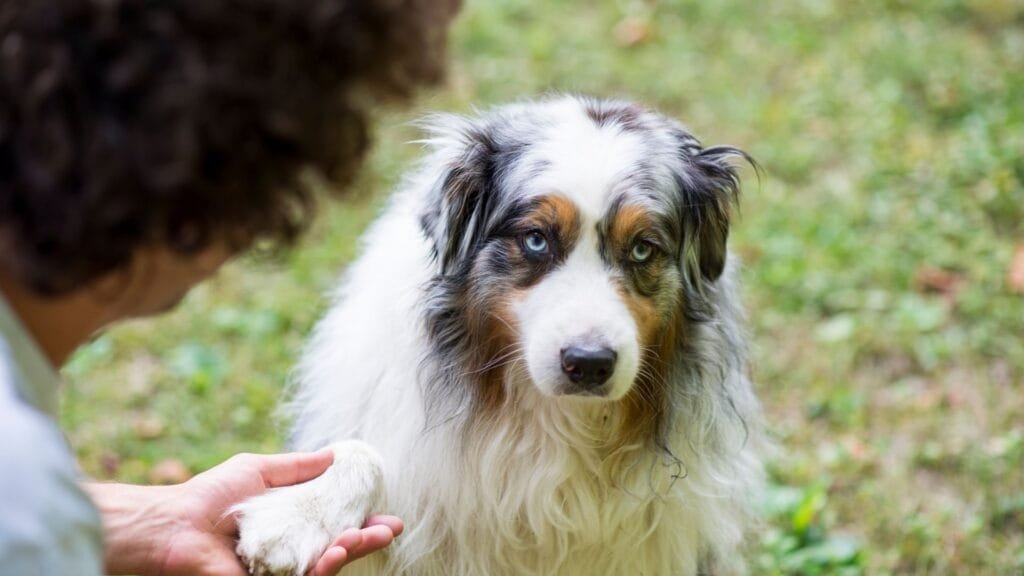
How to Teach Dog to Shake Paw Step by Step
The easiest approach is to teach your dog that offering a paw makes a reward appear. You can then add a verbal cue and gradually shape the behaviour into a polite paw shake.
Step 1: Ask Your Dog to Sit
Begin with your dog sitting comfortably in front of you.
If your dog already knows “Sit,” give the cue and reward them for settling. A sitting position makes it easier for your dog to lift a front paw without losing balance.
If your dog struggles to sit comfortably, do not insist on this position. You can adapt the exercise to a comfortable standing position or choose another trick.
Step 2: Show Your Dog a Treat
Hold a small treat in your closed hand and let your dog investigate it.
Your dog may sniff, lick, or nudge your hand. That is fine. Keep your hand still and avoid repeatedly waving the treat around.
Wait patiently for your dog to make a different movement, particularly a small lift of one front paw.
Some dogs naturally paw at a closed hand when trying to access food. Others may need more time to experiment.
Step 3: Reward the First Paw Movement
The moment your dog lifts a paw, even slightly, mark the behaviour with a word such as “Yes!” and immediately give them a treat.
Timing matters. Your dog needs to understand that lifting the paw, rather than sniffing or licking your hand, earned the reward.
Repeat the exercise several times. If your dog begins lifting their paw more often, you are making progress.
Expert tip: At first, reward even a small paw lift. You can gradually ask for a more deliberate movement once your dog understands the game.
Step 4: Encourage Your Dog to Place Their Paw in Your Hand
Once your dog regularly lifts a paw, position your open palm near the paw’s natural path.
When your dog lifts their paw toward your hand, mark the behaviour and reward them. Over several repetitions, encourage them to make gentle contact with your palm.
Do not grab their leg or pull their paw upward. Your dog should willingly offer the movement.
If your dog becomes confused, return to rewarding the smallest successful paw lift and build up again.
Step 5: Add the “Shake” Command
When your dog reliably offers a paw toward your hand, introduce the verbal cue.
Follow this sequence:
- Say “Shake” once.
- Pause briefly.
- Present your open palm in the same position you have been practising.
- Reward your dog when they place their paw in your hand.
- Repeat for a few successful attempts.
Keep the command consistent and avoid repeating it several times in a row.
Your dog needs to learn that the word “Shake” predicts the behaviour, rather than simply responding to your hand movement.
Step 6: Gradually Remove the Food Lure
If your dog only lifts their paw when they see a treat, it is time to change the way you reward them.
Keep the treat in your other hand or in a nearby treat pouch. Give the “Shake” cue and present your palm without showing the food first.
When your dog performs the behaviour, mark it with “Yes!” and then deliver the treat.
This teaches your dog to respond to the cue rather than relying on the sight or smell of food in your hand.
Step 7: Build a Calm, Reliable Paw Shake
Once your dog understands the command, practise making the behaviour smoother.
Reward your dog for:
- Waiting until you give the cue.
- Offering a paw without jumping.
- Placing the paw gently in your hand.
- Keeping the paw there for a brief moment.
- Remaining relaxed throughout the exercise.
You can gradually increase the time your dog keeps their paw in your hand, but begin with a very short contact.
End the interaction before your dog becomes bored or frustrated.
How Long Does It Take to Teach a Dog to Shake Paw?
Many dogs begin understanding the basic movement within a few short sessions. Others may need several days or longer, particularly if they are easily distracted or unfamiliar with reward-based training.
Your dog’s progress depends on factors such as previous training, motivation, confidence, age, and comfort with paw handling.
For the best results:
- Practise for around 3–5 minutes per session.
- Aim for one to three short sessions a day if your dog remains engaged.
- Finish after a successful repetition whenever possible.
- Take breaks if your dog starts losing interest.
- Repeat easy exercises before introducing more difficult steps.
Consistency is more important than the length of each session. A few positive minutes each day are usually more productive than one long session that leaves your dog tired.
Common Mistakes to Avoid When Teaching a Dog to Shake Paw
Even a simple trick can become confusing if the training is inconsistent. Watch out for these common problems.
1. Forcing Your Dog’s Paw Into Your Hand
Picking up your dog’s paw and holding it may look like a shortcut, but it does not necessarily teach them to offer the behaviour independently.
It can also make dogs uncomfortable, especially if they dislike having their feet touched.
Better approach: Reward voluntary paw movements and allow your dog to choose to make contact.
2. Repeating the Command Too Often
Saying “Shake, shake, shake” can weaken the clarity of the cue.
Your dog may learn that the word is background noise rather than a signal to perform a specific action.
Better approach: Give the command once, wait briefly, and help your dog succeed with an easier step if necessary.
3. Training for Too Long
Repeated attempts without breaks can lead to frustration, distraction, and reduced motivation.
Better approach: Keep sessions short and stop when your dog is still enjoying the activity.
4. Rewarding the Wrong Behaviour
If you give treats while your dog is jumping, pawing wildly, or barking, you may unintentionally encourage those actions.
Better approach: Mark the specific behaviour you want, such as a gentle paw lift or calm contact with your hand.
5. Expecting Immediate Results
Dogs learn at different rates. Comparing your dog’s progress with videos of dogs performing polished tricks can lead to unrealistic expectations.
Better approach: Focus on small improvements and reward each stage of learning.
6. Ignoring Signs of Discomfort
Pulling away, repeatedly licking the lips, turning the head, stiffening, or attempting to leave may indicate stress or discomfort, although individual signals need to be interpreted in context.
Better approach: Pause the session, give your dog space, and avoid touching the paw if they seem uncomfortable. If the behaviour is new or accompanied by limping or tenderness, consult your veterinarian.
Expert Tips to Help Your Dog Learn Faster
Once your dog understands the basics, a few adjustments can make training more effective.
Use a Marker Word
A marker word such as “Yes!” identifies the exact moment your dog gets something right.
Say it immediately when the paw moves toward your hand, then deliver the reward. This helps your dog connect the correct action with the positive outcome.
A clicker can serve the same purpose if you prefer using one.
Keep Your Body Language Consistent
Present your palm in roughly the same position during the early stages. Avoid moving your hand around or changing the exercise every time.
Consistency helps your dog recognise the pattern and understand what is expected.
Reward Calm Behaviour
If your dog gets excited, jumping or grabbing at your hand can become part of the routine.
Wait for a calmer moment before trying again. Reward gentle paw placement rather than enthusiastic scratching.
Practise in Different Environments
Once your dog responds reliably at home, try practising in another quiet room.
Later, you can practise in the garden or another familiar location with mild distractions. If your dog struggles, return to an easier environment.
Gradually Reduce Treat Frequency
In the beginning, reward each successful repetition. Once the behaviour is reliable, you can sometimes reward with praise, play, or other rewards your dog enjoys.
However, continue reinforcing the behaviour regularly, especially when practising around distractions or introducing new challenges.
How to Teach Your Dog to Shake With the Other Paw
After your dog masters the first paw, you may want to teach them to offer the other one.
Start by choosing a separate cue, such as “Other paw.” This helps your dog distinguish between the two behaviours.
Follow these steps:
- Ask your dog for their familiar “Shake.”
- Reward the successful response.
- Reset by allowing your dog to place both front paws comfortably on the ground.
- Give the new “Other paw” cue and wait for a movement with the opposite paw.
- Mark and reward even a small movement in the right direction.
- Gradually shape that movement into a gentle placement in your open hand.
Be patient. Dogs often develop a strong preference for one paw, and learning to offer the other may take additional practice.
Avoid physically repositioning your dog’s legs. Let the movement develop naturally through reward-based training.
What If Your Dog Won’t Give You Their Paw?
Some dogs do not naturally lift their paws toward people. Others may have learned that pawing at hands is undesirable, or they may dislike having their feet handled.
If your dog does not respond to the closed-hand exercise, try rewarding any small, voluntary shift or lift of a front paw while they sit or stand comfortably.
You can also use a technique called shaping, which means rewarding successive steps toward the finished behaviour.
For example:
- First, reward looking toward your hand.
- Next, reward shifting weight or lifting a paw slightly.
- Then, reward moving the paw toward your palm.
- Finally, reward placing the paw gently in your hand.
You will not necessarily need every stage. Move forward whenever your dog is succeeding consistently.
If your dog repeatedly withdraws their paw, seems worried, or shows signs of pain, stop rather than pushing through. A different trick, such as touching your hand with their nose, may be a more comfortable alternative.
Frequently Asked Questions
1. What Is the Easiest Way to Teach a Dog to Shake Paw?
The easiest method for many dogs is to use a small treat and reward a voluntary paw lift. Start with your dog sitting comfortably, wait for them to lift a paw, and mark the movement with “Yes!” before giving the treat.
Gradually encourage the paw to touch your open hand. Once your dog performs the movement reliably, add the verbal command “Shake” and practise without showing the treat beforehand.
2. Can You Teach an Older Dog to Shake Paw?
Yes. Older dogs can learn new tricks, provided the exercise is comfortable and suited to their physical abilities.
Use short sessions, high-value rewards, and a relaxed pace. If your dog has arthritis, mobility problems, or sensitive paws, avoid requiring a sit or lifting the leg, and ask your veterinarian whether paw-based training is appropriate.
3. How Do I Teach My Dog to Shake Without Treats?
Begin with treats because they can make the learning process clearer and more rewarding. Once your dog reliably responds to the command, gradually introduce other rewards, such as enthusiastic praise, a favourite toy, or a brief play session.
You can also vary the rewards rather than eliminating them completely. The important thing is to keep reinforcing the behaviour so your dog continues to find responding to the cue worthwhile.
Conclusion: How to Teach Dog to Shake Paw Successfully
Learning how to teach dog to shake paw does not require complicated equipment, hours of practice, or professional training experience. It requires a clear command, a few rewarding repetitions, and the patience to let your dog learn at their own pace.
Start by rewarding a small paw lift, gradually encourage contact with your open hand, and introduce the “Shake” cue once the movement becomes predictable. Keep your sessions short, avoid forcing the paw, and celebrate each step forward.
Remember, the goal is not simply to teach a cute trick. It is to build trust, improve communication, and make learning enjoyable for both of you.
Your next step: Grab a few small treats, find a quiet spot, and practise the first paw lift today. With consistent, positive training, you and your dog can turn a simple movement into a reliable trick you will both enjoy.