German Shepherd Obedience Training Steps
A Complete Guide for a Well-Behaved Dog
German Shepherds are intelligent, loyal, energetic dogs that thrive when they have a clear purpose. But that intelligence can become a challenge when your dog pulls hard on the lead, ignores commands, jumps on visitors, or becomes distracted the moment you step outside.
The good news? With the right approach, you can teach your German Shepherd to listen, respond reliably, and behave calmly in everyday situations.
These German Shepherd obedience training steps will help you build good habits from the ground up, whether you have a young puppy or an adult dog that needs better manners. At mydogtrained.com, our goal is to help dog owners understand canine behaviour and use practical, reward-based training techniques that make everyday life with their dogs easier.
You don’t need to shout, punish, or spend hours drilling commands. You need consistency, clear communication, patience, and a plan that works for your dog’s age and temperament.
Why German Shepherd Obedience Training Is So Important
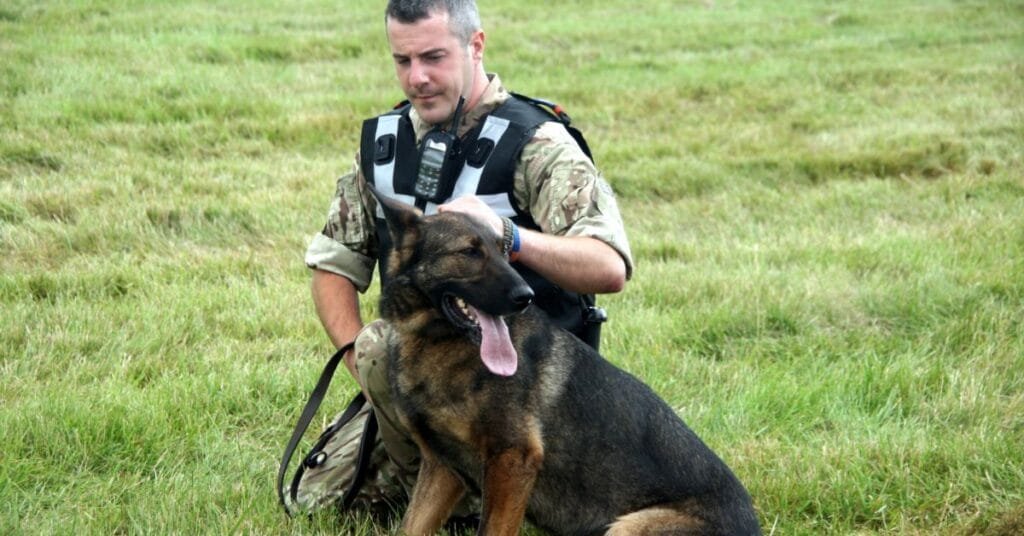
German Shepherds were developed to work closely with people. Their intelligence, athleticism, confidence, and ability to learn make them excellent companions, but these qualities also mean they need regular mental and physical activity.
Without suitable guidance, a German Shepherd may develop habits such as:
- Pulling strongly on the lead during walks.
- Barking excessively at people, dogs, or unfamiliar noises.
- Jumping on family members and visitors.
- Ignoring recall commands when something exciting appears.
- Becoming destructive when bored or left without enough stimulation.
- Reacting defensively when frightened or overwhelmed.
Obedience training helps prevent these problems by teaching your dog what behaviour you expect.
It also strengthens your relationship. When your German Shepherd understands your signals and trusts you to guide them, everyday activities become safer and more enjoyable.
The aim is not to make your dog fearful or submissive. It is to build a confident, responsive companion that can make good choices in different environments.
German Shepherd Obedience Training Steps: Start With the Basics
Before introducing complicated exercises, establish a few essential training habits.
Step 1: Choose a Quiet Training Area
Begin somewhere familiar with very few distractions, such as your living room, enclosed garden, or another secure space.
Keep your first sessions short. Five to ten minutes is often enough, particularly for puppies that have limited attention spans.
Have the following items ready:
- Small, soft training treats.
- A comfortable, well-fitted harness or flat collar.
- A standard lead for controlled practice.
- A favourite toy for dogs motivated by play.
- A marker word, such as “Yes!”, to identify correct behaviour.
Use the same words and hand signals consistently. If one family member says “Down” to mean lie down while another uses it to mean get off the sofa, your dog may become confused.
Step 2: Teach Your German Shepherd to Respond to Their Name
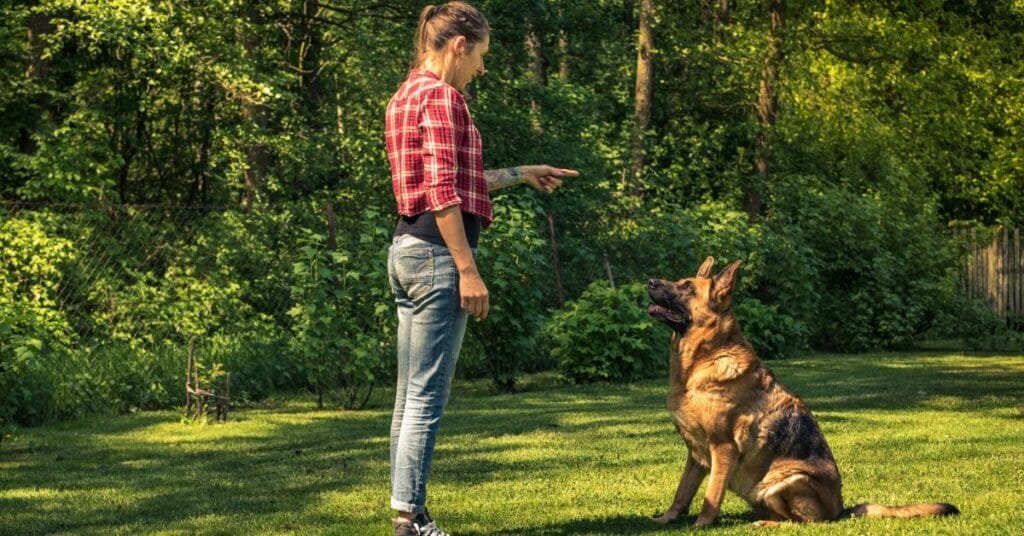
Reliable attention is the foundation of obedience. Before your dog can follow a command, they need to notice that you are communicating with them.
Follow these steps:
- Say your dog’s name once in a friendly voice.
- Wait for them to look towards you.
- Immediately say “Yes!” and offer a treat.
- Repeat several times, allowing a short pause between repetitions.
- Gradually practise in different rooms and quieter outdoor areas.
If your dog doesn’t respond, avoid repeatedly calling their name. Reduce distractions, move closer, or make the exercise easier.
Your dog’s name should predict positive interaction, not frustration or punishment.
Step-by-Step German Shepherd Obedience Commands
Once your dog is paying attention, introduce the basic commands that make daily life easier.
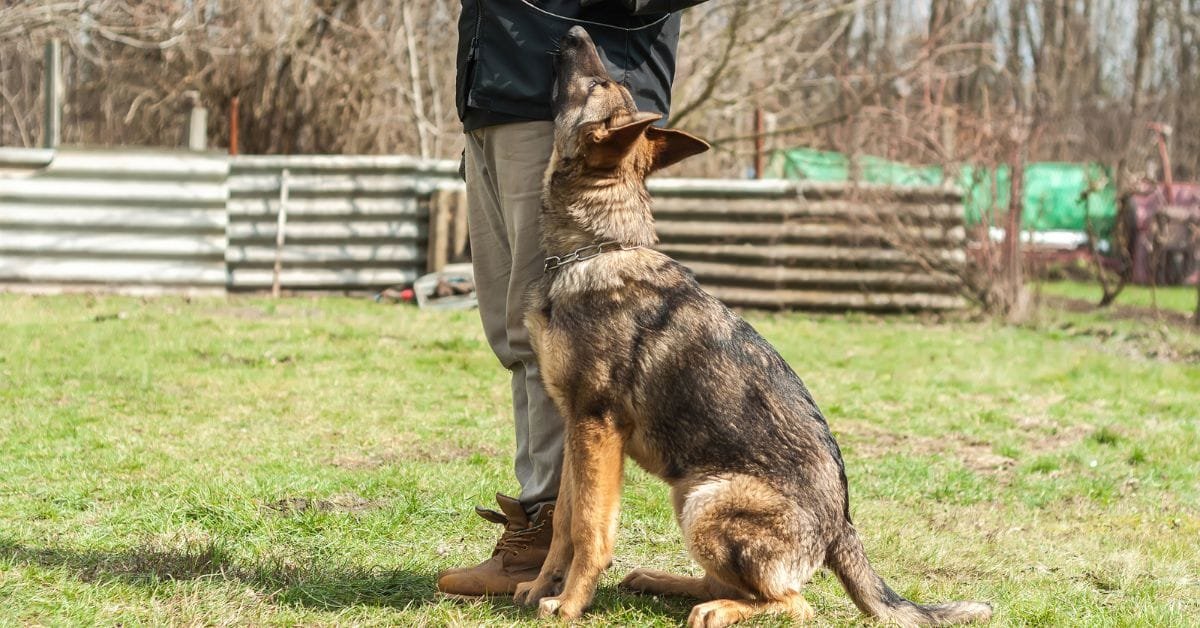
Step 3: Teach the Sit Command
“Sit” helps your German Shepherd practise self-control before meals, walks, greetings, and other exciting activities.
To teach it:
- Hold a treat close to your dog’s nose.
- Slowly move the treat upwards and slightly towards the back of their head.
- As their nose follows the treat, their bottom will often lower naturally.
- The moment they sit, mark the behaviour with “Yes!” and reward them.
- After several successful repetitions, say “Sit” just before guiding them into position.
Keep your movements gentle. Never push your dog’s hindquarters down, as this can make the exercise uncomfortable or confusing.
Practise until your dog can sit when asked without needing to follow the treat every time.
Step 4: Teach the Down Command
The “Down” command teaches your dog to lie down on cue. It can help them settle while you eat, work, or welcome visitors.
Start with your dog sitting or standing comfortably.
- Hold a treat near their nose.
- Move it slowly towards the floor between their front paws.
- Guide the treat slightly forwards if necessary.
- When their elbows and body reach the ground, say “Yes!” and reward them.
- Introduce the word “Down” once they begin offering the movement reliably.
If your dog stands up or walks away, make the movement easier rather than forcing them into position.
Some dogs find lying down uncomfortable on hard surfaces. Try a mat or carpet if your German Shepherd seems reluctant.
Step 5: Teach Stay for Better Impulse Control
“Stay” tells your dog to remain in position until you release them.
Begin with a simple sit. Say “Stay”, pause for one second, and reward your dog while they are still sitting.
Then introduce small increases in difficulty:
- Increase the time from one second to three, then five.
- Take one small step away and immediately return.
- Gradually increase the distance.
- Practise in different rooms before moving outdoors.
Use a release word such as “Free” to tell your dog when the exercise has finished.
If your dog gets up, calmly reset and make the next repetition easier. Avoid increasing duration, distance, and distractions simultaneously.
Never assume that a dog who can stay for 30 seconds in your kitchen can do the same beside a busy road.
Step 6: Build a Reliable Recall
Recall means coming back to you when called. For German Shepherds, this skill is particularly important because of their size, strength, and potential to chase moving distractions.
Start indoors or in a secure, enclosed garden.
- Say your dog’s name followed by “Come!” in an upbeat voice.
- Take a few steps backwards to encourage them to follow.
- Reward them generously when they reach you.
- Gently touch their collar or harness before giving the reward, so they become comfortable being handled.
- Repeat in different safe locations.
Make returning to you worthwhile. Use special treats, favourite toys, or a short game.
Never punish your German Shepherd for finally coming back, even if they took their time. Punishment can teach a dog that returning to you leads to unpleasant consequences.
For outdoor practice, use a long training line attached to suitable equipment in a safe, open area. Do not practise near traffic or allow an unreliable dog to roam off-leash in public.
Training Your German Shepherd to Walk Nicely on a Lead
Step 7: Stop Pulling Before It Becomes a Habit
A powerful German Shepherd can make walks uncomfortable when they pull continuously. Loose-lead walking teaches your dog that staying near you allows the walk to continue.
Start in a quiet area.
- Hold the lead securely without keeping it constantly tight.
- Reward your dog when they walk beside you with a loose lead.
- If they move ahead and pull, stop walking.
- Wait for the lead to loosen, or encourage your dog to turn back towards you.
- Resume walking and reward the next few steps of loose-lead movement.
At first, you may travel only a short distance. That’s normal.
Avoid jerking the lead or using pain to force your dog into position. These methods can create discomfort and may increase fear or frustration around other dogs and people.
Step 8: Practise Walking Past Distractions
Once your dog can walk nicely in a quiet setting, gradually introduce more challenging environments.
Practise at a comfortable distance from:
- Other dogs.
- Cyclists and joggers.
- Children playing.
- Busy footpaths.
- Unfamiliar people.
Reward your German Shepherd for checking in with you, walking calmly, or responding to a familiar cue.
If your dog starts barking, lunging, or refusing food, the situation may be too difficult. Increase your distance and give them room to settle.
A dog that reacts strongly to other dogs may need a separate behaviour-modification plan rather than more obedience drills.
German Shepherd Obedience Training Steps for Everyday Manners
Basic commands are useful, but good manners are what make a dog easier to live with.
Step 9: Teach Your Dog Not to Jump on People
Jumping often happens because a dog wants attention and has learned that putting their paws on someone produces an exciting response.
Teach an alternative behaviour.
- Ask your dog for a “Sit” before greeting.
- Reward them while all four paws remain on the floor.
- Ask visitors to greet your dog calmly when they can follow this rule.
- If your dog jumps, have the person briefly withdraw attention, provided everyone remains safe.
- Reward calm behaviour as soon as your dog settles.
Do not expect immediate success when visitors arrive. Excitement can make even a well-trained dog struggle to respond.
Practise with one familiar person before attempting greetings with a group.
Step 10: Teach Leave It
“Leave it” helps your dog disengage from something you don’t want them to approach or pick up.
Begin with a treat enclosed in your closed hand.
- Allow your dog to sniff your hand without opening it.
- Wait until they briefly stop investigating or move their nose away.
- Mark the moment with “Yes!” and reward them using a different treat from your other hand.
- Repeat until your dog begins to disengage more quickly.
- Introduce the cue “Leave it” before presenting the covered treat.
Later, practise with safe objects on the floor while supervising closely.
If your dog has already picked up something dangerous, don’t rely on “Leave it” alone. Use a trained “Drop” cue where possible, avoid chasing or forcibly grabbing at the dog’s mouth, and seek veterinary advice if they may have swallowed a hazardous object.
Step 11: Teach Your Dog to Settle on a Mat
German Shepherds need activity, but they also need to learn how to relax.
Choose a comfortable mat or dog bed. Reward your dog for looking at it, approaching it, stepping onto it, and eventually lying down.
Introduce the cue “Place” or “Bed” once your dog understands the behaviour.
Gradually reward longer periods of calm resting. Give your dog a suitable chew or food puzzle when appropriate, and avoid turning every interaction into an exciting game.
A reliable settle cue can help during family meals, quiet evenings, and visits from friends.
How to Create a Daily German Shepherd Training Routine
Consistency matters more than the length of a single session. Short, regular practice helps your dog learn without becoming frustrated or mentally exhausted.
Here is a simple routine you can adapt to your dog’s age and ability.
| Time | Training activity | Suggested duration |
|---|---|---|
| Morning | Name response, sit and stay | 5–10 minutes |
| Morning walk | Loose-lead walking and check-ins | 10–15 minutes of focused practice within the walk |
| Afternoon | Recall or leave-it practice | 5–10 minutes |
| Evening | Mat training and calm behaviour | 5–10 minutes |
These are starting points, not strict requirements. Puppies may need shorter sessions, frequent toilet breaks, plenty of sleep, and age-appropriate exercise.
Adult dogs may benefit from additional walks, sniffing opportunities, play, scent games, and other activities suited to their fitness.
Avoid excessive high-impact exercise for growing puppies. Your veterinarian can help you decide what is appropriate for your dog’s age, joints, and health.
Common German Shepherd Obedience Training Mistakes to Avoid
Even committed owners can accidentally make training harder. Recognising these mistakes will help you make faster, steadier progress.
Expecting Too Much Too Soon
A dog that responds perfectly at home may struggle in a park full of dogs, birds, and unfamiliar smells.
Build each skill in manageable stages. Increase distractions gradually, and reward success before making the exercise harder.
Repeating Commands Over and Over
Calling “Come, come, come!” teaches your dog that the first cue can be ignored.
Say the command once, help your dog succeed, and adjust the environment if they struggle.
Using Punishment Instead of Clear Guidance
Shouting, hitting, harsh leash corrections, and intimidation can damage trust and increase stress. They may also make fear-based aggression worse.
Reward-based training gives your German Shepherd clear information about which behaviours work. If you are experiencing aggression, guarding, or serious reactivity, seek help from a qualified professional who uses humane, evidence-based methods.
Training Only at Home
Dogs don’t automatically understand that a command learned in the kitchen also applies to the park.
Practise the same skills in several locations, increasing distractions gradually while keeping your dog safe.
Forgetting to Reward Good Behaviour
Owners often notice unwanted behaviour but overlook the moments when their dog makes a good choice.
Reward your German Shepherd for walking calmly, settling independently, looking towards you, and greeting people politely. These everyday rewards help good habits become part of normal life.
How Long Does German Shepherd Obedience Training Take?
The timeline depends on your dog’s age, previous experiences, temperament, motivation, and the consistency of your training.
Some dogs learn a basic sit within a few sessions. Reliable recall around distractions, relaxed lead walking, and calm greetings can take weeks or months of practice.
Think of training as an ongoing process rather than a course that ends after a particular number of days.
Measure progress by asking:
- Does my dog respond more quickly than last week?
- Can we practise successfully with slightly more distraction?
- Does my dog recover more easily after becoming excited?
- Are unwanted behaviours happening less often?
- Can my dog perform the skill in more than one location?
Small improvements count. If progress stalls, return to an easier stage and build confidence before trying again.
Frequently Asked Questions
1. What Is the Best Age to Start German Shepherd Obedience Training?
You can begin gentle, reward-based training as soon as your puppy comes home, often from around eight weeks of age.
Start with name recognition, toilet training, handling, short attention exercises, and simple cues such as “Sit”. Keep sessions brief and positive.
Adult German Shepherds can learn too. Previous habits may require more time to change, but age alone does not prevent a dog from developing better obedience.
2. How Many Times a Day Should I Train My German Shepherd?
Aim for two to four short training sessions a day, adjusting the frequency and duration to your dog’s age, energy, health, and attention span.
Five minutes of focused practice can be more useful than a long session in which your dog becomes tired or frustrated.
You can also reinforce obedience during ordinary activities by asking for a sit before meals, rewarding calm lead walking, or practising a brief stay while you prepare your dog’s food.
3. How Do I Train a German Shepherd That Ignores Commands?
First, check whether your dog understands the command in that particular environment.
If your German Shepherd responds at home but ignores you outside, distractions may be too difficult. Return to a quieter location, use valuable rewards, and practise at a level where your dog can succeed.
If your dog suddenly stops responding, appears uncomfortable, or behaves differently from usual, consider possible pain, hearing problems, stress, or other health issues and consult your veterinarian.
For persistent aggression, severe reactivity, or behaviour that puts people or animals at risk, work with a qualified canine behaviour professional.
Conclusion: Put These German Shepherd Obedience Training Steps Into Practice
Training a German Shepherd takes patience, consistency, and a willingness to adapt to your dog’s individual needs. The most successful owners don’t expect perfection overnight. They build one reliable behaviour at a time.
Start with attention, Sit, Down, and Stay. Then work on recall, loose-lead walking, polite greetings, and everyday self-control. Reward the behaviour you want, keep your sessions manageable, and practise in different environments as your dog becomes more confident.
Remember that your German Shepherd needs more than commands. They need appropriate exercise, mental stimulation, rest, social experiences, and a trusting relationship with you.
Your next step is simple: choose one exercise from this guide and practise it for five minutes today. Repeat it tomorrow, reward every improvement, and gradually make the task more challenging.
With steady guidance and humane training, you can help your German Shepherd become a calmer, more responsive, and more confident companion. Keep going. Every successful repetition builds the foundation for better behaviour tomorrow.