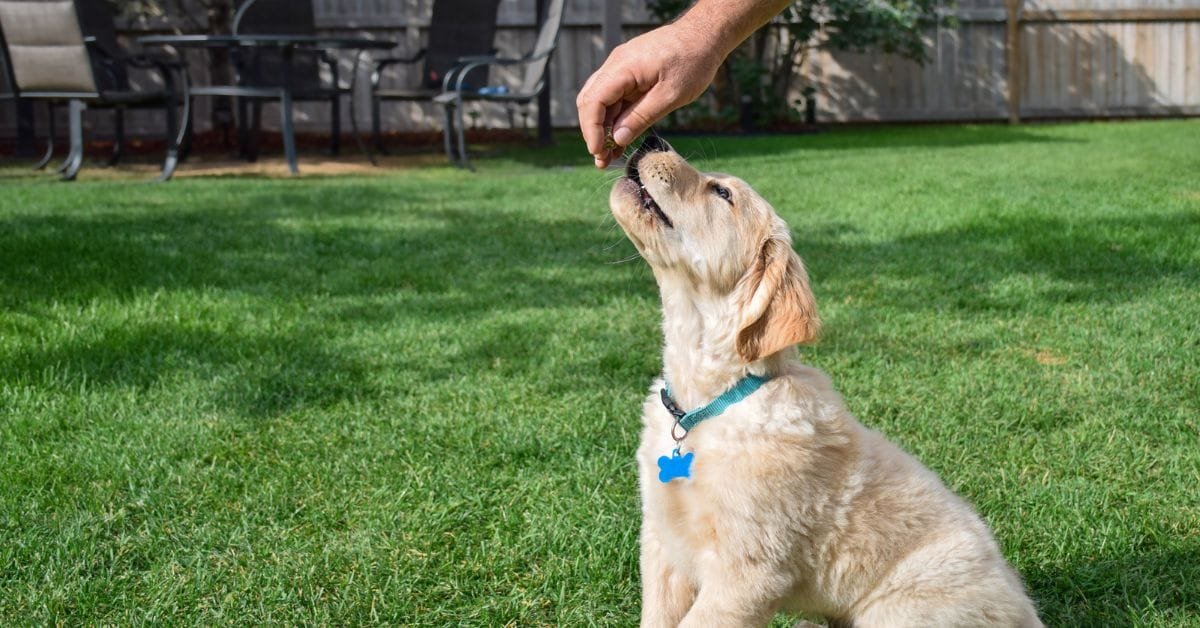
Golden Retriever Puppy Training
The Complete Guide for a Happy, Well-Behaved Dog
Bringing home a Golden Retriever puppy is an exciting experience. Those adorable eyes, wagging tails, and endless enthusiasm can make every day brighter. But between the toilet accidents, sharp puppy teeth, jumping on guests, and sleepless nights, you might quickly discover that raising a well-behaved dog takes more than love alone.
The good news? Golden Retriever puppy training becomes much easier when you start early, stay consistent, and use positive reinforcement.
Golden Retrievers are intelligent, affectionate, and eager to please, making them wonderful companions for families, individuals, and first-time dog owners. However, their intelligence and high energy levels mean they need guidance, structure, exercise, and plenty of mental stimulation from an early age.
At My Dog Trained, our goal is to help you understand your puppy’s behaviour and build practical training habits that last a lifetime. This comprehensive guide covers everything from toilet training and basic commands to bite inhibition, leash manners, socialisation, and common mistakes to avoid.
Whether your puppy is eight weeks old or already a few months into life with you, these steps will help you develop a stronger bond and raise a confident, well-mannered Golden Retriever.
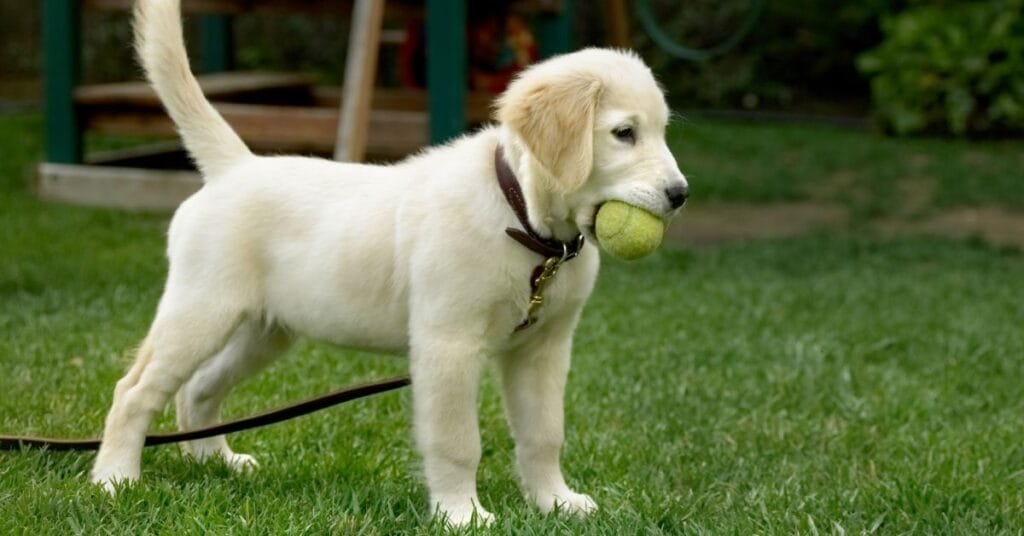
Why Golden Retriever Puppy Training Should Start Early
The first few months of your puppy’s life are an important period for learning. Puppies are constantly discovering how the world works, which behaviours earn rewards, and what they can expect from their human family.
Starting training early helps establish good habits before unwanted behaviours become more difficult to change.
Golden Retrievers are naturally sociable and energetic, but that doesn’t mean every puppy automatically knows how to behave. Without consistent guidance, even a friendly Golden Retriever can develop habits such as jumping on people, pulling on the lead, chewing furniture, or barking for attention.
Early training helps your puppy learn to:
- Respond to their name and come when called.
- Toilet in the appropriate place.
- Sit politely rather than jumping on people.
- Walk comfortably on a lead.
- Settle down after periods of excitement.
- Accept grooming, handling, and routine care.
- Interact appropriately with people, other dogs, and their surroundings.
Expert tip: You don’t need to teach everything in one week. Short, enjoyable sessions repeated throughout the day are far more effective than long sessions that leave your puppy tired or frustrated.

Golden Retriever Puppy Training Essentials
Before you begin teaching commands, establish a predictable routine and prepare a suitable training environment.
Your puppy should have a comfortable sleeping area, fresh water, appropriate puppy food, safe chew toys, and a designated toilet area. Baby gates or a puppy playpen can help you supervise your dog and prevent unwanted behaviour when you cannot give your full attention.
Keep small, soft training treats nearby so you can reward good decisions immediately.
Use Positive Reinforcement
Positive reinforcement means rewarding a behaviour you want your puppy to repeat. Rewards can include food treats, praise, toys, gentle play, or access to something your puppy enjoys.
For example, when your Golden Retriever sits instead of jumping on you, reward the sit. Over time, your puppy learns that keeping four paws on the floor is a better way to get attention.
Follow these principles:
- Reward the behaviour you want as soon as it happens.
- Use a consistent verbal marker, such as “Yes!”, to identify the correct behaviour.
- Keep training sessions short, usually around three to five minutes for young puppies.
- Finish with an easy exercise your puppy can succeed at.
- Avoid shouting, intimidation, or physical punishment.
Punishment can create fear and confusion without teaching your puppy what to do instead. Reward-based training gives your dog a clearer path to success and helps preserve trust.
Choose Consistent Commands
Everyone in your household should use the same words and expectations.
If one person says “Down” to mean lie on the floor while another uses it to mean stop jumping, your puppy may become confused.
Choose simple cues such as:
- Sit
- Stay
- Come
- Leave it
- Drop it
- Bed
- Let’s go
Consistency makes learning easier and helps your Golden Retriever understand what you expect.
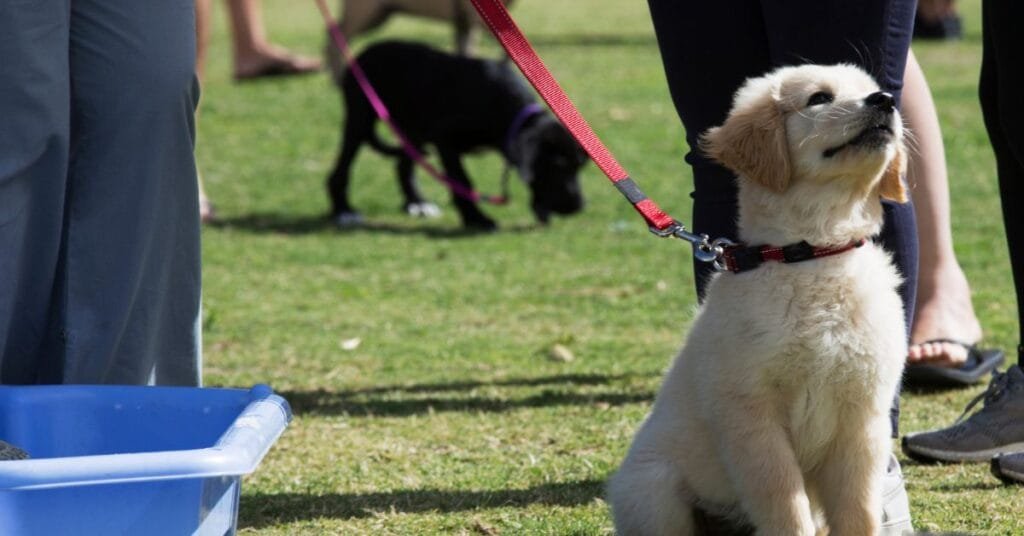
Step-by-Step Golden Retriever Puppy Training
The following training exercises build the foundation for good behaviour at home and in public.
Step 1: Teach Your Puppy to Respond to Their Name
Your puppy’s name should predict something positive.
Start in a quiet room with a few small treats. Say your puppy’s name once in a cheerful voice, and immediately reward them when they look towards you.
Repeat this several times, taking breaks if your puppy becomes distracted.
Once your puppy responds reliably indoors, practise in different rooms and quiet outdoor environments. Gradually increase distractions as their skills improve.
Important: Avoid repeatedly calling your puppy’s name when you cannot reinforce a response. You want the name to become a reliable signal that paying attention to you is worthwhile.
Step 2: Master Toilet Training
Toilet training is one of the first priorities for a new puppy owner. Golden Retrievers can learn quickly, but young puppies have limited bladder control and need frequent opportunities to go outside.
Take your puppy to the designated toilet area:
- Immediately after waking up.
- Shortly after eating or drinking.
- After play sessions.
- After naps.
- Before bedtime.
- Whenever they begin sniffing, circling, or suddenly wandering away.
Stand quietly and give your puppy time to sniff. When they finish toileting, reward them immediately with praise and a small treat.
Use the same toilet area whenever practical, as familiar smells can help your puppy understand what to do.
What If Your Puppy Has an Accident?
Accidents are a normal part of learning. If you catch your puppy starting to toilet indoors, gently interrupt them and take them outside.
If you discover an accident later, clean it thoroughly with an enzymatic pet cleaner. Avoid scolding your puppy, as they may learn to hide when they need to toilet rather than learning where to go.
Expert tip: Supervision is essential. If you cannot watch your puppy closely, use a safe, appropriately sized puppy pen or another comfortable, puppy-proofed space.
Step 3: Teach the Sit Command
Teaching “Sit” provides a simple way to encourage polite behaviour.
- Hold a small treat near your puppy’s nose.
- Slowly move the treat upwards and slightly towards the back of their head.
- As your puppy follows the treat, their bottom will often lower naturally.
- The moment their bottom touches the floor, say “Yes!”
- Give them the treat.
- Repeat a few times, then take a break.
Once your puppy begins sitting reliably, introduce the word “Sit” just before making the hand movement.
Practise before meals, when greeting family members, and before attaching the lead. These everyday opportunities help your puppy understand that sitting is a useful behaviour.
Never push your puppy’s bottom down to force the position. Guide them into making the choice themselves.
Step 4: Stop Jumping Up on People
Golden Retrievers are enthusiastic greeters. Unfortunately, a friendly puppy that jumps on people can become a large adult dog that knocks over children or frightens visitors.
The key is to reward calm greetings rather than jumping.
When your puppy approaches you with all four paws on the floor, offer attention and praise. If they jump, calmly remove your attention for a moment, then reward them when they settle.
Ask family members and visitors to follow the same approach.
You can also ask your puppy to “Sit” before greeting people. Begin with familiar adults in a quiet setting before practising around more exciting visitors.
Avoid kneeing your puppy, shouting, or pushing them away during greetings. These reactions can accidentally turn jumping into an exciting game.
Step 5: Manage Puppy Biting and Mouthing
Puppies explore with their mouths, and teething can make chewing especially appealing. Your Golden Retriever may nip your hands, grab clothing, or bite during play.
The goal is to teach appropriate mouth behaviour while providing suitable alternatives.
Try these techniques:
- Keep sturdy, puppy-safe chew toys within reach.
- Redirect biting towards an appropriate toy.
- Pause play briefly if teeth make contact with your skin.
- Resume calmly when your puppy settles.
- Provide adequate sleep and quiet time throughout the day.
Overtired puppies often become more mouthy, excitable, and difficult to redirect. If biting increases during the evening, your puppy may need rest rather than more exercise.
Avoid rough hand-wrestling games if they encourage your puppy to bite harder.
If biting is intense, persistent, associated with stiff body language, or appears to involve fear or aggression, seek advice from a qualified, reward-based trainer or veterinary behaviour professional.
Step 6: Introduce Lead Training
Walking on a lead is an important life skill, but puppies need time to learn that a lead is not something to fight against.
Begin indoors by allowing your puppy to investigate a lightweight, well-fitted harness. Reward them for remaining relaxed while you gently attach the lead.
Walk a few steps and reward your puppy for staying near you. Practise turning in different directions and encouraging them to follow.
When your puppy pulls, stop moving or gently change direction when it is safe to do so. Reward them when the lead becomes loose and they return their attention to you.
Keep early sessions short and positive.
In busy areas, avoid forcing your puppy to approach unfamiliar dogs or people. Allow them enough distance to remain comfortable and responsive.
Before walking in public places, follow your veterinarian’s advice regarding vaccinations and local disease risks. Safe socialisation can often begin earlier through controlled, low-risk experiences.
Step 7: Teach Recall With the Come Command
A reliable recall can protect your dog throughout their life.
Start indoors, where distractions are limited. Move a short distance away, say your puppy’s name followed by “Come!”, and encourage them towards you with an inviting voice.
When they arrive, reward them generously with treats, praise, or a favourite toy.
Practise from gradually greater distances as your puppy becomes more reliable.
To strengthen recall:
- Never punish your puppy for coming back, even if they took a long time.
- Avoid calling them only when something enjoyable is about to end.
- Reward spontaneous check-ins during walks.
- Practise with a long training line in a secure, suitable area.
- Increase distractions gradually.
Keep your puppy on a lead or long line in unsecured public areas until recall is dependable and the environment is safe.
Socialisation: Raising a Confident Golden Retriever
Socialisation involves helping your puppy feel comfortable around the sights, sounds, people, animals, and experiences they may encounter throughout life.
The early socialisation period is especially important, so ask your veterinarian about safe ways to begin before your puppy has completed every vaccination.
Good socialisation is not about exposing your puppy to as many experiences as possible. It is about making those experiences positive, manageable, and appropriate for their age.
What Should Your Puppy Experience?
Gradually introduce your puppy to:
- People wearing different types of clothing.
- Household noises and everyday appliances.
- Car rides and gentle handling.
- Different surfaces, such as grass, carpet, and pavement.
- Calm, healthy, appropriately vaccinated dogs.
- Brushing, ear checks, and gentle paw handling.
- Short periods alone in a safe environment.
Allow your puppy to observe unfamiliar things from a comfortable distance. Reward calm curiosity and give them the freedom to move away when they feel uncertain.
Never force your puppy to greet strangers or interact with another dog.
A puppy that backs away, freezes, tucks their tail, or repeatedly tries to hide may be uncomfortable. Reduce the intensity of the experience and allow them to settle.
How Much Exercise Does a Golden Retriever Puppy Need?
Golden Retrievers are active dogs, but growing puppies should not be exercised like mature adult dogs.
Their developing bodies need rest, free movement, play, and age-appropriate activity. Repetitive high-impact exercise, forced running, and excessive jumping can place unnecessary strain on developing joints.
Instead, focus on a balanced daily routine that includes:
- Short, self-paced play sessions.
- Gentle sniffing and exploration.
- Brief training exercises.
- Food puzzles and scent games.
- Calm social experiences.
- Plenty of uninterrupted sleep.
Avoid relying on intense exercise to tire your puppy out. An overstimulated, overtired puppy may become more excitable rather than calmer.
If you are unsure how much activity is appropriate for your puppy’s age, health, and development, consult your veterinarian.
Create a Daily Golden Retriever Puppy Training Schedule
A predictable routine helps your puppy understand what happens next and makes training easier to manage.
Here is an example of how to organise your day. Adjust the timing to suit your puppy’s age, feeding schedule, toileting needs, and sleep requirements.
| Time | Activity |
|---|---|
| Early morning | Toilet break, breakfast, and a short training session |
| Mid-morning | Gentle play, toilet break, then rest |
| Late morning | Brief name-response or sit practice |
| Lunchtime | Meal if scheduled, toilet break, and calm interaction |
| Afternoon | Sniffing game, safe exploration, and a nap |
| Early evening | Lead practice, play, and toilet break |
| Evening | Calm family time, gentle handling, and rest |
| Before bed | Final toilet trip and a quiet bedtime routine |
Young puppies need frequent toilet opportunities and substantial sleep, often around 18–20 hours over a full day, although individual needs vary.
Do not expect a young puppy to follow a rigid schedule perfectly. Use the routine as a guide, then respond to your puppy’s behaviour and needs.
Common Golden Retriever Puppy Training Mistakes to Avoid
Even well-meaning owners can unintentionally make training harder.
Expecting Too Much Too Soon
Puppies have short attention spans and limited impulse control. Expecting a young dog to remain perfectly calm in a busy park is unrealistic.
Teach skills in easy environments first, then increase difficulty gradually.
Repeating Commands Without Reinforcement
If you say “Sit, sit, sit” repeatedly, your puppy may learn that the first cue does not matter.
Give the cue once, help your puppy succeed, and reward the correct response.
Inconsistent Household Rules
If one family member allows jumping while another discourages it, your puppy receives mixed messages.
Agree on simple rules and make sure everyone follows them consistently.
Giving Too Much Freedom Too Early
Puppies that roam unsupervised may develop habits such as chewing furniture, stealing shoes, or toileting indoors.
Use supervision, gates, a suitable pen, and puppy-proofing to prevent problems while your dog learns.
Ignoring Mental Stimulation
Golden Retrievers need more than physical activity. Sniffing games, simple training tasks, and food puzzles can help satisfy their natural curiosity.
Mental stimulation should be age-appropriate and enjoyable, not another source of pressure.
When Should You Consider Professional Dog Training?
Professional support can be valuable if your puppy struggles with fear, separation-related distress, persistent biting, lead reactivity, or difficulty settling.
Look for a trainer who uses reward-based methods, explains their approach clearly, and adapts training to your individual dog.
Avoid professionals who rely on intimidation, pain, or frightening corrections. These methods can damage trust and may worsen fear-related behaviour.
If a behaviour changes suddenly, your puppy seems painful, or toileting problems persist despite an appropriate routine, consult your veterinarian to rule out medical causes.
Frequently Asked Questions About Golden Retriever Puppy Training
1. What Is the Best Age to Start Golden Retriever Puppy Training?
You can begin simple training as soon as your puppy arrives home, often at around eight weeks of age.
Start with name recognition, toilet routines, gentle handling, and rewarding calm behaviour. Keep sessions short and enjoyable, and introduce new experiences safely with veterinary guidance.
Formal training classes can also be useful when they are age-appropriate, well managed, and focused on positive reinforcement.
2. How Long Does It Take to Train a Golden Retriever Puppy?
The time required depends on the behaviour, your puppy’s age, their temperament, and how consistently you practise.
Some puppies learn basic cues within days, while reliable toilet habits, calm greetings, loose-lead walking, and recall can take weeks or months of ongoing practice.
Remember that learning a command in your living room is different from following it around other dogs or exciting distractions. Continue practising familiar skills in different environments as your puppy develops.
3. Are Golden Retrievers Easy to Train for Beginners?
Golden Retrievers are generally considered a good choice for first-time dog owners because they are intelligent, sociable, and often motivated by food, play, and human interaction.
However, they still require time, supervision, exercise, mental stimulation, and consistent training.
Their enthusiasm can make puppyhood challenging, particularly when it comes to jumping, mouthing, and lead pulling. With realistic expectations and a positive approach, beginners can develop excellent training foundations.
Conclusion: Make Golden Retriever Puppy Training a Daily Habit
Raising a well-behaved Golden Retriever does not happen overnight. It develops through hundreds of small moments when you reward the right behaviour, provide clear guidance, and help your puppy navigate the world with confidence.
Golden Retriever puppy training works best when you combine patience, consistency, positive reinforcement, and age-appropriate expectations.
Start with the essentials: toilet training, name recognition, sit, bite inhibition, and calm greetings. Add lead manners, recall, and socialisation as your puppy becomes more confident.
Remember to celebrate progress rather than expecting perfection. Every successful toilet trip, calm greeting, and voluntary check-in helps build the foundation for a wonderful adult dog.
Your next step is simple: choose one skill from this guide and practise it for three to five minutes today. Keep it positive, reward your puppy’s effort, and repeat the exercise tomorrow.
With the right approach, you can turn those energetic puppy moments into lasting habits and build a rewarding relationship with your Golden Retriever for years to come.
For more practical advice, training tips, and guidance on raising a happy, well-mannered companion, keep exploring My Dog Trained.